

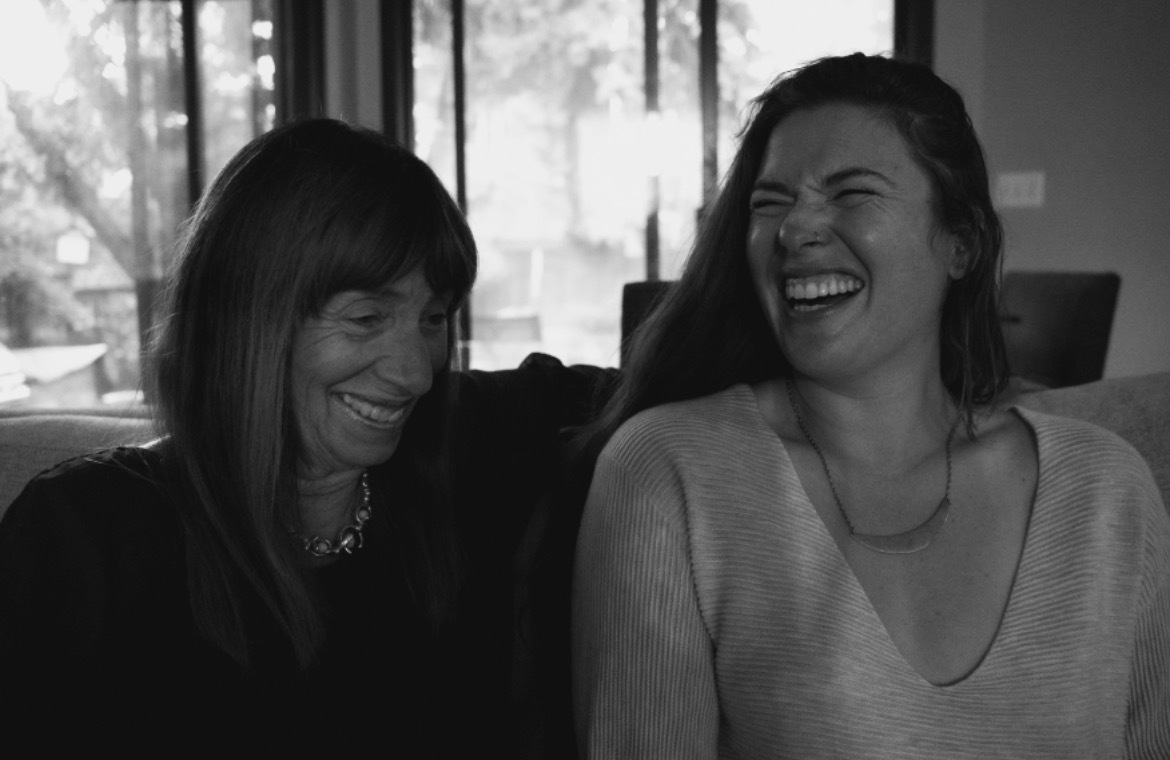
Growing Up with Dr. Ellyn Bader: Lessons from a World-Class Therapist and Mother
“Hi, Petunia” My mother leaves voicemails that begin like this often. “Hi, Petunia, it’s me.” There is something in that voicemail that is so quintessentially

It’s easy for partners to say, “I want more intimacy” while having no idea what they mean and no history of expressing their desires to one another.
They may be afraid to pursue what it is they really want. Or perhaps they don’t really know what it is.
Clients often mask this ambivalence by talking intellectually about the issues that are getting in the way of closeness. Or they may complain, “There is never enough time for us.”
To help deepen their connection, we often have to help each partner face their ambivalence and stand behind what they truly desire.
When I sit in a session and hear an intellectual discussion of intimacy, I know the intellectualizing is often covering up something that’s painful or scary.
Then it’s time to stop talking about what isn’t happening and start creating more intimate moments with themselves and their partners.
The first step is to recognize that this discussion is “Adult-ego state” as described by Dr. Eric Berne, author of Transactional Analysis in Psychotherapy. Our clients are telling long stories, giving facts, offering information, and responding to words.
But they’re not connecting to themselves or each other on an emotional level.
And it will become exhausting for you to keep following your clients down the same conversational rabbit holes without being able to address their core issues.
When a person is operating primarily from the Adult-ego state, there’s usually very little felt experience of intimacy. Intimacy is experienced in the Child-ego state.
So as therapists, our challenge is, “How can I facilitate moments in the room where there is either a Child-ego state to Child-ego state connection, or an empathic, nurturing, connection?”
When there are too many words going on in a session, it’s usually an indication to me that the clients are more in their heads than in their bodies.
So the roadmap I follow when helping couples work through ambivalence is to keep framing their conflict, asking emotional questions, and guiding their interactions to an emotional level.
In my work, I’ve found Gestalt 2-chair work to be especially helpful in seeing both parts of each partner’s ambivalence.
First, I’ll ask one partner, “When you have the goal of becoming more intimate, do you know what that means? Do you know what you hope for? What is an example of an emotionally experienced moment of intimacy for you?
I’ll ask them to tell me, “What feels intimate to you? What are you doing? What is your partner doing? When do you have that feeling of being close, connected, or intimate with someone else?”
I’ve found it helpful to give partners lots of short examples to see what they latch onto and what feels intimate to each.
For example, I might say, “Some people feel intimate when they joke and laugh together. Some feel it sparring with one another in a playful way. Other people feel it much more sensuously, like when they’re taking a bath together or making love. Others feel intimate when walking side by side exploring ideas, talking philosophy or dreaming about future goals.”
Once the client has been able to describe what intimacy looks like and feels like, I’ll then ask them to switch to another chair, or change positions.
I’ll ask them to talk from the part of them that is scared to be open about these desires and won’t risk creating emotional intensity.
I might say, “Could you say to the other part of you, ‘I am scared to unleash my desires’ or ‘I’m scared to show you what I want because you will make fun of me or belittle me’?”
And then, “Tell her a bit more about what you think might happen if you unleash that part of you.”
The dialogue can continue moving through the unexpressed fears and ideally towards a collaboration between the two parts.
You can support each partner to continue moving towards a deeper understanding that, “You and your partner are different people, and may each want a different kind of intimacy. But you two are in this together. You can learn together and create it together. But it won’t work if you try to create something that satisfies only one person’s intimacy, and not the other’s.”
Intimacy is very much like a fingerprint. No two partners are exactly identical. Each couple is stretched by learning about the intimacy “template” of the other person. Each of you will feel close and connected to one another at different times and in different ways. Your relationship will thrive when you can give to one another in a way that feels meaningful to each of you.
If you'd like more strategies on helping couples develop deeper connection in their relationships, please check out our one-hour training audio and written transcript, Creating Intensity in Conflict Avoidant Couples.
In the meantime, I’d like to hear from you – how do you think about intimacy and ambivalence? How do you support risk taking? Can you use some of these ideas in your work with couples? Please leave a comment below.
Also, let me know if you would like to read a transcript of a session like the one described above.

"*" indicates required fields
 We respect your privacy.
"*" indicates required fields
We respect your privacy.“Hi, Petunia” My mother leaves voicemails that begin like this often. “Hi, Petunia, it’s me.” There is something in that voicemail that is so quintessentially
"*" indicates required fields