
When Clients Stop Coming: How to Fill Your Practice
A step-by-step training for therapists who want a full calendar. No sleazy selling, awkward outreach, or pretending to be someone you’re not.
- April 27, 1-2:30 pm Pacific
- Replay & workbook included
Does your calendar have more gaps in it than you want?
Maybe one or two clients dropped off and weren’t replaced. Maybe you raised your rates and the pipeline didn’t keep up. Maybe you’re seeing fewer couples because to them therapy feels like a luxury right now.
The instinct is to wait. To hope “this too shall pass.” That clients will come back when things settle down. But here’s the inconvenient part: things are not settling down. And waiting is not a strategy. Waiting is just more delay.
What’s worth understanding is that some therapists have full practices right now. Waitlists, even. They are not in a different economy. They’re not luckier or more likeable. They just started doing what was actually in their control. And you can, too.


Are you ready for a plan that works?
We’re inviting Edward Plant to share his simple, doable process for getting more clients. At the end of this 90-minute session, everything will be clearer. You will have an action plan, a workbook with real work already done in it, and a system you can start using the following week.
01
02
03
04
How to find partners who will actually refer — not just promise to
05
06
- April 27, 1-2:30 pm Pacific
- Replay & workbook included
If you follow the directions and stick to the plan — it's impossible not to boost your referrals.
Filling your practice is not a marketing problem. It is a relationship problem. And you already know how to build relationships. You do it with clients every single day.
This is for you if…

Your calendar has gaps that you don’t like

You want referrals to be your bread and butter

You're not a natural networker, don't love being "on," and have zero interest in being an influencer

You've tried the directory profiles, social posts, or an ad – with disappointing results

You're willing to give it one focused hour a week – and want that hour to get you results

You're in private practice to stay, and responsible for filling your own calendar
This is not for you if…

You're looking for social media hacks, viral content formulas, or ad strategies

You're not willing to put in some effort — this is a system, and systems require following

Someone else handles your marketing and referrals entirely

You're looking for inspiration without implementation
What one focused hour a week is actually worth
While we can’t guarantee you specific numbers, Ed has seen therapists consistently add clients to their case load when they use this process.
(instead of Those aren’t gimmicky marketing numbers pulled out of thin air. They are what Edward has watched happen repeatedly for the therapists, psychologists, and allied health practitioners he has worked with directly.)
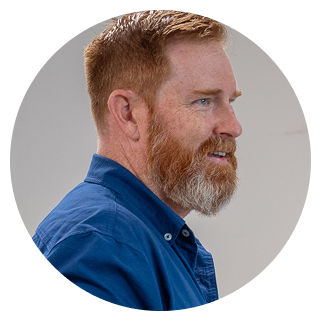
Meet Edward Plant
Founder · Army Veteran · Business Coach
Edward spent 17 years as an officer in the Australian Army, leading soldiers in complex environments where making complicated problems simple was not optional. It was life or death. He brought that discipline into business, building The Business League, a networking and business development organization he has run for 15 years.
When COVID ended the events business overnight, he did what he’d been trained to do: adapt. He audited everything that generated real business. And the collaborative partnership process he’ll share in this workshop has been running, tested, and refined for almost a decade.
Ed has worked directly with therapists, psychologists, and allied health practitioners around the world to rebuild their practices. He has been a client of couples therapy himself. He ran the Institute for Couples in Business, working with the specific tensions that arise for people who are in relationships and livelihoods together.
He understands what you do. He respects the work. And he has spent a long time figuring out how to make the business part of private practice a great deal less painful, so you can spend more time with the clients you like working with.


A Personal Message From Ellyn
“I have spent most of my career helping therapists sharpen their skills with couples and relationships. But as the world evolves, so does
The Couples Institute®. I am hearing from too many therapists that the economy, war, AI, and telehealth are impacting their practices. I can’t continue as though nothing is happening. So I wanted to offer something a little different to support you.”
One Honest Thing

This is not a set-it-and-forget-it situation. The system works. But systems require following. The therapists who get results from this are the ones who show up to the webinar, complete the workbook, and put in one focused hour a week consistently. The ones who don’t are the ones who watch, feel motivated for a few days, and then let it sit.
We would like you to be the former. Which is exactly why the workbook exists — because doing something in the room makes you dramatically more likely to continue doing it afterward. The implementation is built into the training itself.
It’s non-stop action from beginning to end, for those who are serious about getting clients now. If you follow the directions and stick to the plan — it’s impossible not to get clients.
One hour a week. That is the ask. It is almost certainly less than the time you spend Googling/Facebooking/YouTubing for answers — without a system to follow afterward.
- April 27, 1-2:30 pm Pacific
- Replay & workbook included
Frequently Asked Questions
Is there a replay?
Yes. Register once and you get everything: live session, the replay, and the workbook.
I hate the idea of marketing and selling. Is this going to make me feel like I need to take a shower?
No. And this might be the most important thing to say about what this process actually is.
Every other approach asks you to become someone you're not — louder, more promotional, more comfortable pitching yourself at a dinner party or into a camera. This one doesn't. It's built on the premise that trust, presence, and the ability to genuinely connect with another person are not soft skills — they are the actual engine of client generation. Which means you already possess most of what this requires.
This process does not rely on cold outreach, ad campaigns, SEO, influencing, or becoming “a good marketer in the 21st century.” What you'll learn is a human-centered, relationship-first approach that people who've been through it describe as feeling ethical, comfortable, and effective.
How much time will this actually take to implement after the webinar?
One hour a week. That's the floor, and Edward has stress-tested it. More time means faster results — but one focused, deliberate hour a week is enough to identify your first five potential collaborative partners, begin building those relationships, and put the success rhythm in place.
To put that in perspective: it's probably less time than you currently spend watching someone else's YouTube video about how to grow a practice, reading threads in a therapist Facebook group, or lying awake thinking about your calendar. The difference is that this hour is pointed at a specific system with a specific sequence.
I'm an introvert. Does this require me to be someone I'm not?
The answer is a firm no.
The collaborative partnership approach is built for people who are better in a one-on-one conversation than in a crowd. You don't need to be a natural networker. You don't need to enjoy working a room, being "on," or making small talk with strangers at an event. The whole premise of this process is that those environments don't work anyway, because rooms full of people all trying to sell to each other produce very little for anyone.
What works is a small number of carefully chosen relationships, built with genuine care, that generate referrals because the trust is real. That is a game that plays directly to your strengths. You do what's comfortable for you. The process is designed to work with your actual personality — not a version of yourself you'd have to rehearse.
I've been to webinars where I left with notes and did absolutely nothing with them. How is this different?
Information without implementation is just expensive note-taking. Edward has watched the drop-off happen too many times — someone leaves a training feeling genuinely motivated, life intervenes, and three weeks later nothing has changed.
So this session is structured differently. The training is designed so you're learning and working at the same time — not passively absorbing, but actually doing the first steps in real time. You won't have a list of things to do later. You'll have things already done. That's a meaningful difference, and it's intentional.
Will this work if my practice is already mostly full?
Yes — and in some ways the timing is ideal. More clients means you can be selective about which clients you take. You can let go of the ones who drain you and hold space for the ones who are the best fit for your work. It means you stop operating from scarcity, which changes the quality of your attention.
The process is useful whether you're trying to fill a half-empty calendar or build enough momentum that you finally have real options. Either way, the process is the same. The outcome just looks different depending on where you're starting.
What’s the refund policy? Is there a guarantee?
Because your order comes with Edward’s proprietary information – the training and the workbook – there are no refunds. But we can confidently guarantee that if you follow the process laid out, this training will more than pay for itself.
Average sessions per client = ~8 sessions
Average value per client = $800–$1,600
The world isn't settling down. It would be a mistake to wait for that.
There is a particular kind of hope that keeps us from acting — the hope that conditions will improve, that things will stabilize, that if we are patient enough the calendar will fill itself up. That’s not irrational. It’s just not a plan.
Whatever you learn in this webinar will be relevant regardless of what the world does next. If your practice is light, you'll have a clear path out of that. If it's full, you can bring in more clients so you have the freedom to choose who you work with and who you refer out. Either way, this is one hour a week to employ a system that actually fits the way you work.
It will provide the clear, intuitive, and proven system our profession has long needed, turning what feels like a guessing game into a strategic, step-by-step process.
This isn’t another thing to try and feel bad about. It’s a process backed by almost two decades of field experience, designed specifically for people whose greatest professional strength is empathy and connection — and that treats that strength as the engine, not the obstacle.
Stop waiting.
Start filling your practice.
- Live on April 27 at 1-2:30 pm Pacific
- Workbook & Replay included