


Daily Double Practice Guide
[Editor’s Note: This exercise for couples helps partners communicate to each other twice a day that they love, respect, value, or appreciate what they do

Since its origins, roughly 125 years ago, the field of psychotherapy has been primarily focused on individual clients, applying theories and practice that grew from Western European and American individualistic philosophies, religions and values. Since the 1970s and continuing into the 21st Century, a focus on couple therapy and a dramatic increase in clients with diverse backgrounds have emerged.
Many of these clients bring with them collectivist values, orientations, and religions, particularly around relationships, marriage and family values. How do our models of Euro-American psychotherapy work with couples from collectivistic cultures where values of harmony, fitting in, family ties and avoidance of shame take precedence over self-actualization? This is no small question.
To answer that question, we explored in depth four Asian cultures from East to West: The Philippines, China, India and Israel. Because my four colleagues themselves came from four such cultures, we were able to interview clients and therapists and read scholarly articles in their primary languages (Tagalog, Hindi, Tamil, Mandarin, Hebrew).
In our recent book, Couple Therapy through the Lens of Four Asian Cultures: Working with Clients from Collectivistic Cultures Living in North America, by Shapiro, Wei, Sethu, Gazit and Scott, we offer numerous case vignettes to illustrate the conceptual and intervention differences.
We had to deal with client barriers as we worked on integrating multicultural understanding into therapy, including cultural stigma surrounding mental health, language proficiency issues, lack of access, culturally-informed professionals, unique nature of counseling relationships and unfamiliarity with the therapeutic process.
There are also barriers presented by therapists, including biases regarding gender roles and relationship equity, a lack of knowledge of clients’ home culture and expectations favoring Western forms of adaptation, especially around individuation and boundary-setting, lack of understanding and respect for arranged marriages, gender roles and traditional, indigenous forms of healing, and discomfort in introducing culturally-oriented topics in the therapy process.
The most dominant skill is the therapists use of themselves as persons in interaction, co-creating the therapy with the client couple. A therapist’s presence, empathy, curiosity, humility, and capacity to meet clients in their own cultural frame of reference is essential. The therapeutic process is as much about “being with” clients as it is about guiding them. Cultural humility, process orientation, and attunement to non-verbal cues are indispensable.
In these contexts, trust and safety are built more slowly. A cultural assessment including level of acculturation and clients’ values precede any solution-focused work. Empathy and listening were more important than specific cultural knowledge. As one client opined, “(the therapist) didn’t know anything about China and Chinese people, but she was always interested in learning how our background was important in the present. She was a good listener.”
Non-linear approaches, such as the use of symbols, stories, metaphors and language served to be effective without direct confrontation. We found it effective for clients to speak to one another in the language they use at home, even when the therapist does not understand that language.
It is essential to honor and incorporate clients’ beliefs in non-western systems, such as fortune telling, palmistry, astrology, indigenous healing practices, spirituality or religion.
Ultimately, therapy succeeds less because of the therapists’ expertise in Western-oriented solutions, but because they blended universal skills with cultural attunement.
For example, because interpersonal boundaries are different, therapists must be aware of the significance of family, community and social harmony. In a case example described in the book, one First-Generation Chinese-American man seeking a special accommodation at work, refrained from asking his direct boss for help. Instead, with therapeutic encouragement and some story-telling, he successfully arranged for a mutual friend as a go-between to avoid any hint of shame to either party.
Because of cultural sensitivities, it is often important for therapists to introduce topics such as cultural identity, acculturation stress, religion, spirituality, and important cultural myths and stories with a multi-generational perspective for discussion. Thus, therapy goes beyond what clients are saying or avoiding saying, but includes the clients’ living contexts.
In the case of an Indian-American mother’s sense that her mother-in-law was being intrusive with regard to parenting, a Western approach might involve helping her set clear boundaries on what goes on within the household in a direct conversation. Yet in some cultures, issues of family harmony, shame and avoidance of confrontation may render that solution impossible. Instead, the therapist helped her identify specific areas of discomfort and then helped her involve her husband and father-in-law to indirectly intervene to “benefit the family as a whole.”
In particular, a belief that arranged marriages are inferior can be detrimental. Similarly, a therapist’s deeply held values of equity between the sexes may be challenged in cultures where the woman’s role seems more constrained and anathema to modern Western beliefs of gender-role equality.
Meeting this challenge requires that we as therapists lean less heavily on our traditional individualistic training, recognizing that only some of that knowledge of couple therapy will apply.
"*" indicates required fields
 We respect your privacy.

"*" indicates required fields
We respect your privacy.[Editor’s Note: This exercise for couples helps partners communicate to each other twice a day that they love, respect, value, or appreciate what they do

[Editor’s note: this love letter went to our email list on Valentine’s Day and it seemed good enough to give it a permanent home on
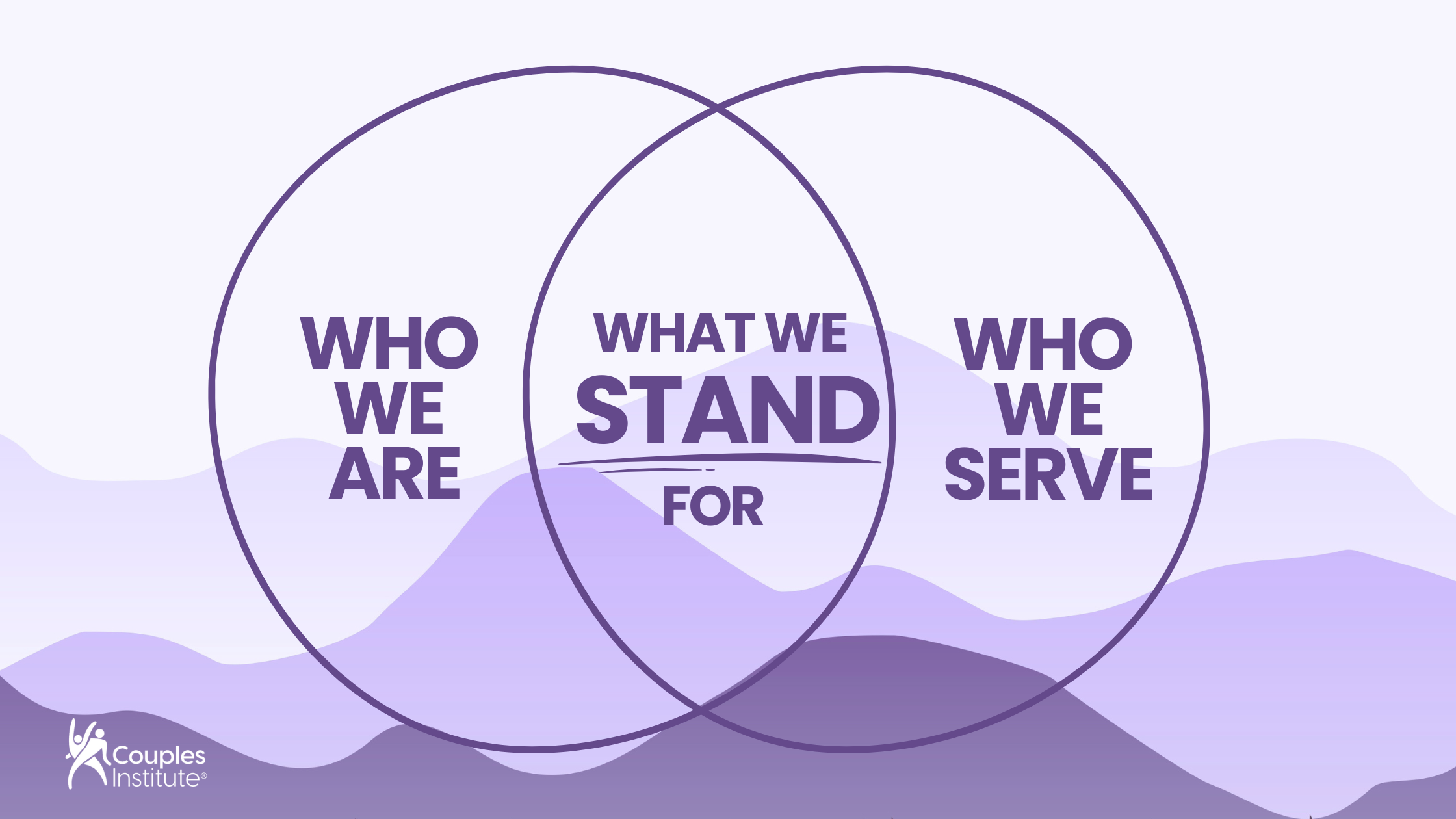
As we look into the New Year, I want to share with you very clearly what Couples Institute stands for, now and always. Most of
"*" indicates required fields
This is incredibly helpful and I will check out this book. I especially am taking with me the idea that “Recognizing shame and harmony as central values” is integral to my work with clients with collectivist cultures. Thank you so much.
Thank you This will help me to understand and be better in my sessions. There’s no stopping when it comes to mental health issues, Something new and different always comes.
An excellent reminder and in particular for dealing with illness/cancer and the treatments that impacts the couples relationship and intimacy and what that means for them.
Thank you for this article and the interventions posed. It brings to the forefront that I must remain aware our more western cultures are among the newest of cultures and that there are so many magnificent cultures that have been in existence for 5000 + years. In order for us to provide the assistance clients deserve, remaining vigilant and widening our scope of understanding and interventions is key.
Thank you so much for this insight!
Very simpatico with the thesis of this article… and perplexed with the value of shame…
Great critical question about our current western psychotherapy models; Great follow up of the necessary research and clinical requirements to answer the question; Great findings and relevant conclusions about what it takes and what is needed to succeed and be truly productive in all relative levels and fronts.
Yes, at the basic level is about interaction and connection; It’s all about co-creating, indeed! It’s about that mutual-concurrent interpersonal and intrapersonal Development that cuts through perceptual, emotional, and conceptual limitations! The rest (any potential healings and actualizations) will follow in due time/place/context –everything in context; nothing exists/develops in a vacuum. Our relationships, and even our cultural differences, is indeed the context of any and every Development and Healing!
Starting point for these is the Awareness of Biases, indeed, and everything else that could lead to healthy Development and Unfoldment of genetic and psychosocial potential –these are the two differentiating ends of the same dimension that also need proper attention and timely integration for fruitful and long lasting tangible results.
Yes about the co-creation of Meaning, and I will add here, co-creation and co-discovery of Purpose -that would include non-western constructs, concepts, and practices of what Healthy Development is all about. There is cultural relativity but also Universal commonalties that bridge various ontological and epistemological approaches about the nature of relevant Cosmologies that do make the difference in the perception and interpretation of Reality in diverse cultures! That is also what embracing Complexity is all about!
A few things do remain ineffable but the points raised in this article do become the foundations for creative and productive engagements.
Great article; thanks for sharing! I will a put the link of this article on my website. Please keep up the great work!
I would love to attend a webinar of yours on the subject