I specialized in working with couples for 40 years. A “back-of-the-envelope” calculation tells me I did about 33,000 hours of couples work.
You can bet I’ve learned a lot of lessons – both painful and productive ones.
Here’s one that might make a difference for you.
I found that when I defined my role it allowed me to be more successful with tough couples by integrating the roles of guide/leader.
It’s crucial to figure out your role for any individual couple in front of you. And it’s a huge challenge – because it’s different for each one.
Defining a clear role for yourself with every couple you see can’t exactly be taught because it’s so complex and individualized. But I have some ideas that might be helpful.
If you had anything like my Rogerian training, you might be inclined to emphasize unconditional acceptance and positive regard. We strive not to direct, judge, or impose our values on our clients.
You’ll notice this approach has some severe limits with highly distressed, highly defended couples.
A non-directive approach is like getting in the car with two very disagreeable people and no agreement on where we are headed! We’ll end up arguing about everything: the destination, the route, the supplies, the schedule, and more.
This frustrating process happened to me with clients over and again. You can imagine how often, as I was seeing about 20-25 couples a week.
If I was going to survive, I had to change my role. Significantly.
You, too, might have noticed that no matter how many different theories you have under your belt, you can’t accomplish much without your strong leadership.
My agenda was always to have each partner become more responsive to the other. But that was not what the partners desired!
When a highly distressed couple seeks help, they are not in pursuit of individual growth. Partners seek relief, hoping you will change their partner and make them more responsive.
They certainly don’t intend to invest much effort or emotional risk on their part.
When we don’t solve that problem to their satisfaction, we limp along in sessions. Or they quit therapy.
A part of me then felt fraudulent. Charging money without delivering a better relationship.
Getting out of this dilemma is a multi-step approach. No simple or single intervention or concept breaks their log jam.
But I can offer some key points to jump-start your thinking.
With highly distressed, highly defended couples, it is important to become a compassionate, supportive guide/leader as quickly as possible.
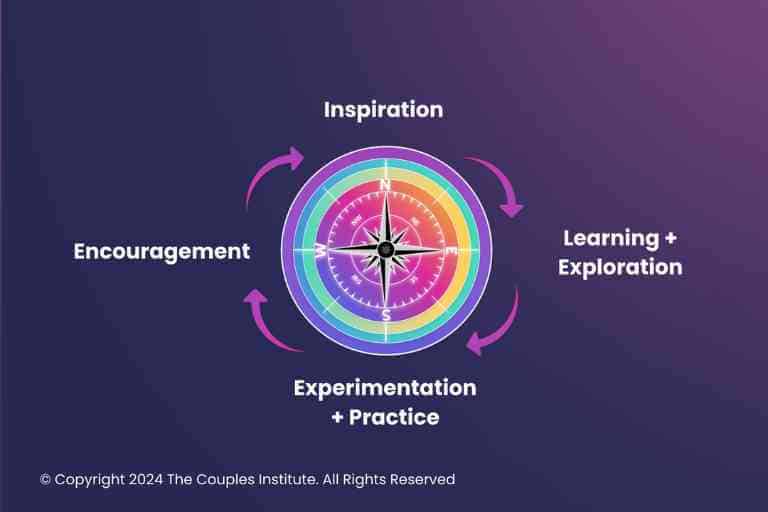
This means co-creating a plan about where your couple wishes their relationship to go. This is their North Star. There is mutual agreement about the direction we are headed. That includes agreement about the role all three of us will play.
Believe me. You do not get that agreement by asking about their goals, because their goals will rarely include individual accountability about individual stretch goals.
And it cannot stop there, with this new plan about where they wish their relationship to go. They’ll need to magnify their motivation because they’re going to need a lot of it on their journey. You’ll need to help them gather all their reasons – all the “whys” they can think of – and then illuminate, clarify, and elaborate them. The more reasons – big and small – the better.
Goals without motivation are mostly a wish list.
Feeling connected with their “why” is more energizing.
Now we are talking about a plan with purpose.
But there is still one more element. The plan and the purpose need emotional energy. This means inspiration. And enthusiasm. Inspiration fuels the car, starts the engine, and keeps it going.
Does the plan and purpose excite their imagination? Do they feel energized and excited/inspired about going forward together working as a team to bring out the best in each other?
I believe every couple has underutilized strengths and talents. If we do not take the lead to help uncover those gems, then sadly they atrophy and die a slow death.
Distressed couples rarely have in-depth discussions about what makes them inspired about their future. If we do not lead them in that direction, their goals, motivation, and inspiration will probably remain undiscovered. And their future remains bleak.
Inspiration often gives couples the motivation to learn and apply the skills, knowledge, support and feedback they get from you.
Your Clearly Defined Role + goals, motivation, inspiration =
A more collaborative journey with your couples
Expanding your role as guide/leader includes illuminating the plan, purpose, and inspiration and makes your journey together more collaborative.
And rewarding.
 We respect your privacy.