


How you can avoid harm and help relationships – in individual therapy
In 1941, Sławomir Rawicz did the impossible and became the first man to walk out of a Siberian labor camp and survive. He braved frostbite
About thirty minutes into a regular weekly team meeting, I started losing my concentration.
You might not know this, but there is a small team behind The Couples Institute®. About twelve people keep things moving. Customer care, program delivery, operations, marketing, technology. Most of us work remotely, so we have a team meeting on Zoom each week.
That was the meeting I was leading that morning.
Nothing dramatic was happening. No conflict. No interruptions. The agenda was moving along the way it usually does.
And yet something felt strange.
A few people were smiling in ways that did not match the conversation. Someone kept glancing away from the screen as if trying not to laugh. Folks were turning on and off their video. The energy in the room felt scattered, and I could not quite get my footing. I tried to stay focused on the discussion, but my attention kept drifting back to the same question.
What is going on here?
When you lead a meeting every week, you get used to a certain rhythm. People are attentive. They ask direct questions. They track the conversation. This time it felt as if something else was happening just outside my awareness.
Still, I kept going.
I moved through updates. I asked for input. We talked about a few projects.
But the feeling in the room did not settle. If anything, the strange undercurrent kept growing stronger. Eventually I stopped mid-discussion and said what I should have said earlier.
“Alright. What is going on?”
That is when the entire team burst into laughter.
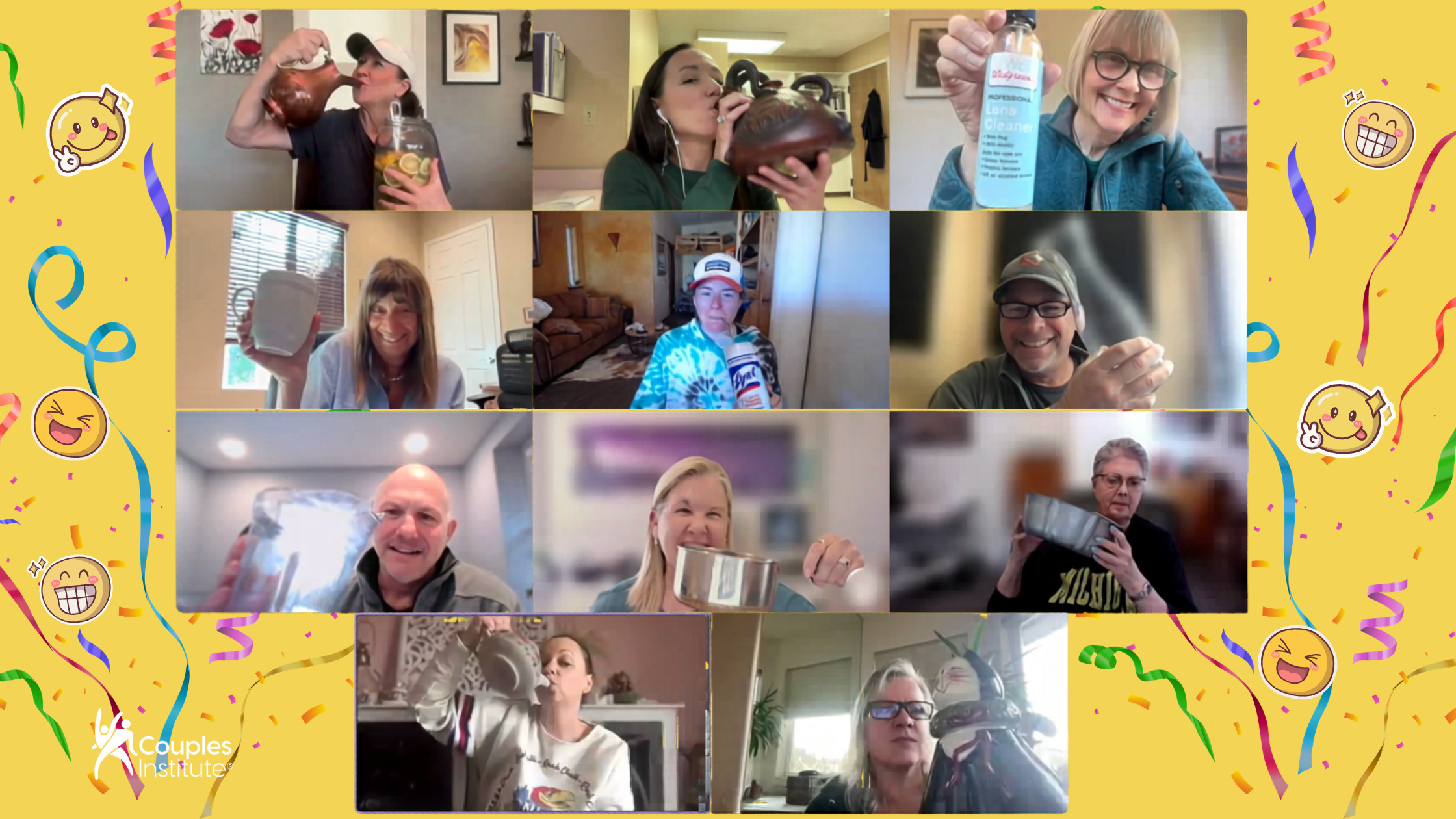
For the previous thirty minutes they had all been participating in a trendy prank. The rule was simple: everyone had to drink from something, but it could not be a normal cup. They would keep doing it until the person leading the meeting finally noticed.
That person was me. Of course, they weren’t all drinking at the same time!
Once they explained it, the screen suddenly made sense.
One person had been calmly sipping water from the spout of a teapot.
Another lifted an enormous baking dish and tried to drink from the corner.
Someone was misting water into their mouth from a small bottle of lens cleaner.
A 5-gallon beverage dispenser someone dipped a ladle into and then drank from the ladle.
Someone else drank from a straw in a bottle of bathroom cleanser!
And then there was the ceramic decanter shaped like a goat.
Yes. A goat.
The person holding it kept tilting this goat-shaped decanter as if nothing unusual was happening.
All of it unfolding while everyone tried to keep a straight face.
I had been the only one unaware.
Eventually I started laughing too. But my first reaction was not amusement. It was confusion. For thirty minutes my brain had been trying to reconcile two different signals. The conversation itself sounded normal. The emotional tone in the room told a different story.
Therapists know this experience well.
You sit with a couple and the words coming out of their mouths sound reasonable enough. They talk about chores, schedules, parenting, or money. But the atmosphere between them says something else entirely.
The sarcasm lands a little too sharply.
One partner withdraws just a little too quickly.
There is tension that nobody is naming.
You feel it before you understand it.
When that happens, many therapists push forward with the content. They try to solve the problem being discussed. They follow the words instead of the emotional signal in the room.
That rarely works.
The useful move is to stop and name what you are sensing: “Something feels off here.”
When that moment of recognition happens, the conversation shifts and the room reorganizes. Sometimes it leads to a painful truth sitting just beneath the surface. Other times it reveals something much lighter.
In my case, it revealed a team full of adults secretly drinking from teapots, baking dishes, ladles, spray bottles, and a ceramic goat.
A ridiculous scene.
And a good reminder.
Pay attention to my intuition and the emotional field in the room. When something does not line up, pause the conversation and ask what is really happening. Clarity almost always follows.
And occasionally, you discover your entire team sipping water from a goat-shaped decanter while trying not to laugh.

"*" indicates required fields
 We respect your privacy.
"*" indicates required fields
We respect your privacy.In 1941, Sławomir Rawicz did the impossible and became the first man to walk out of a Siberian labor camp and survive. He braved frostbite

A common scenario that many of us see in our practices is the over-functioning wife with the anxious-avoidant husband. He is a highly anxious procrastinator

It’s easy to believe that the world’s greatest problems live “out there” in distant countries, in governments, in systems too large to influence. Yet we
"*" indicates required fields