

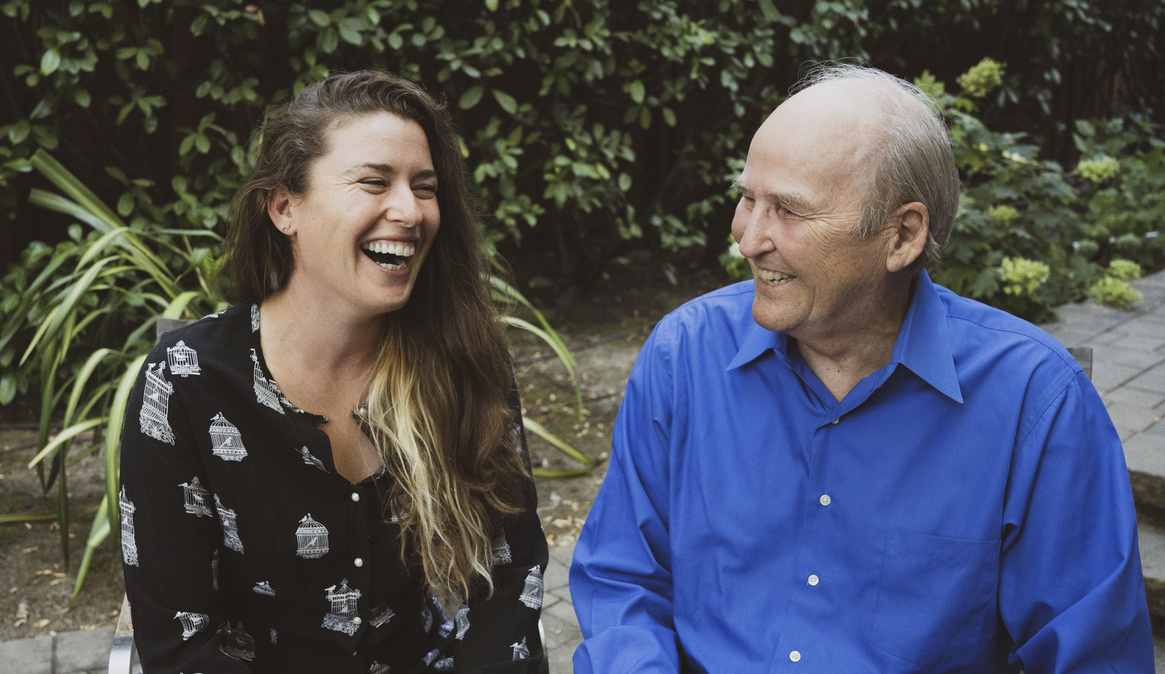
World Famous Dr. Pete Pearson is my Dad. Here’s What That’s Like…
My dad has a PhD in psychology. Which sounds like it should come with a disclaimer. Like, “results may vary” or “side effects include being
Each year I enjoy a special weekend attending the Wisdom 2.0 conference with Pete, our daughter, Molly, and some other special friends. A second pleasure of the Conference is reviewing my notes and sending some insights to you.
A central theme explored by this conference is how do we live with wisdom, awareness and compassion in the digital age?
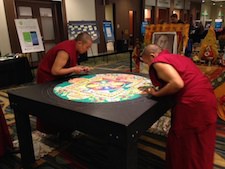
In our high tech world, monks creating sand mandalas are a striking contrast, demonstrating the practice of connecting with every moment.
Since Pete and I presented a workshop this year, I did not attend quite as many talks as usual. However, there were a few highlights definitely worth sharing.
Richard Davidson, neuroscientist and founder of the Center for Investigating Healthy Minds, gave an early talk that started off with his unique humor, “My mind is like a bad neighborhood – I try not to go there alone.”
His life work as a neuroscientist at the University of Wisconsin’s Center for Investigating Healthy Minds has been geared towards learning how to cultivate well-being.
He strongly believes that well-being can be learned and that we can cultivate tools to enhance it.
He reported on several studies including his findings showing that experience can impact how genes are expressed. One study investigated the effects of a day of intensive mindfulness practice in a group of experienced meditators. After eight hours of mindfulness practice, the meditators showed a range of genetic and molecular differences, including altered levels of gene-regulating machinery and reduced levels of pro-inflammatory genes, which in turn correlated with faster physical recovery from stressful situations.
He stated that one of his most controversial findings is that humans come into the world with innate basic goodness and that even six-month old infants show preferences for warm-hearted encounters.
Recently he is learning that compassion is not fixed and that training compassion skills can enable people to approach those who are suffering with more empathy. You might want to check out a summary of one of his recent studies at Cultivate Compassion.
In order to avoid making this newsletter unbearably long, I’ll share just a few quotes and ideas from some other speakers you may recognize.
Sherry Turkle, professor, author, consultant and researcher, gave a talk that was filled with thoughtful one-liners:
Eileen Fisher, the women’s fashion guru, discussed her evolution as she realized that “the fashion business is the second largest polluter in the world” and then recognized the need to move her business towards sustainability. What you might particularly like about her talk is her open commitment to psychotherapy. She described her evolution from shy child to becoming a leader in the fashion industry. She shows her commitment to growth by encouraging and paying for all her employees to do deeper personal work. She also has an unusual policy of paying $5.00 for any previous purchase to be returned and recycled.
Dr. Peter Pearson and Dr. Ellyn Bader. Pete and I were honored to present a workshop this year. I’ll summarize a few of our main points that an audience member might pick out and remember, as I have done with these other presenters.
Our topic was “Lessons for Marriages from Businesses that Succeed and Fail.” We started with 3 reasons businesses fail. Failure to:
And in contrast to that we discussed what it means to succeed as a couples team. We defined a couples team to be: two highly interdependent individuals working towards mutually agreed upon goals with partners holding themselves individually accountable for reaching that goal. And then we looked more deeply into 4 commitments that effective couples make. To become an effective couples team means you make commitments to:
These commitments enable couples to pursue their vision, increase the strength of their teamwork, while being trustworthy in an ongoing way.
The Wisdom 2.0 Conference organizers do a nice job of creating a program of experts and celebrities alike. I love learning from them all and it’s always a pleasure to review the time and share some gems with you.
Please comment below if you have some thoughts to share on living with wisdom, awareness and compassion in the digital age.
"*" indicates required fields
 We respect your privacy.
My dad has a PhD in psychology. Which sounds like it should come with a disclaimer. Like, “results may vary” or “side effects include being
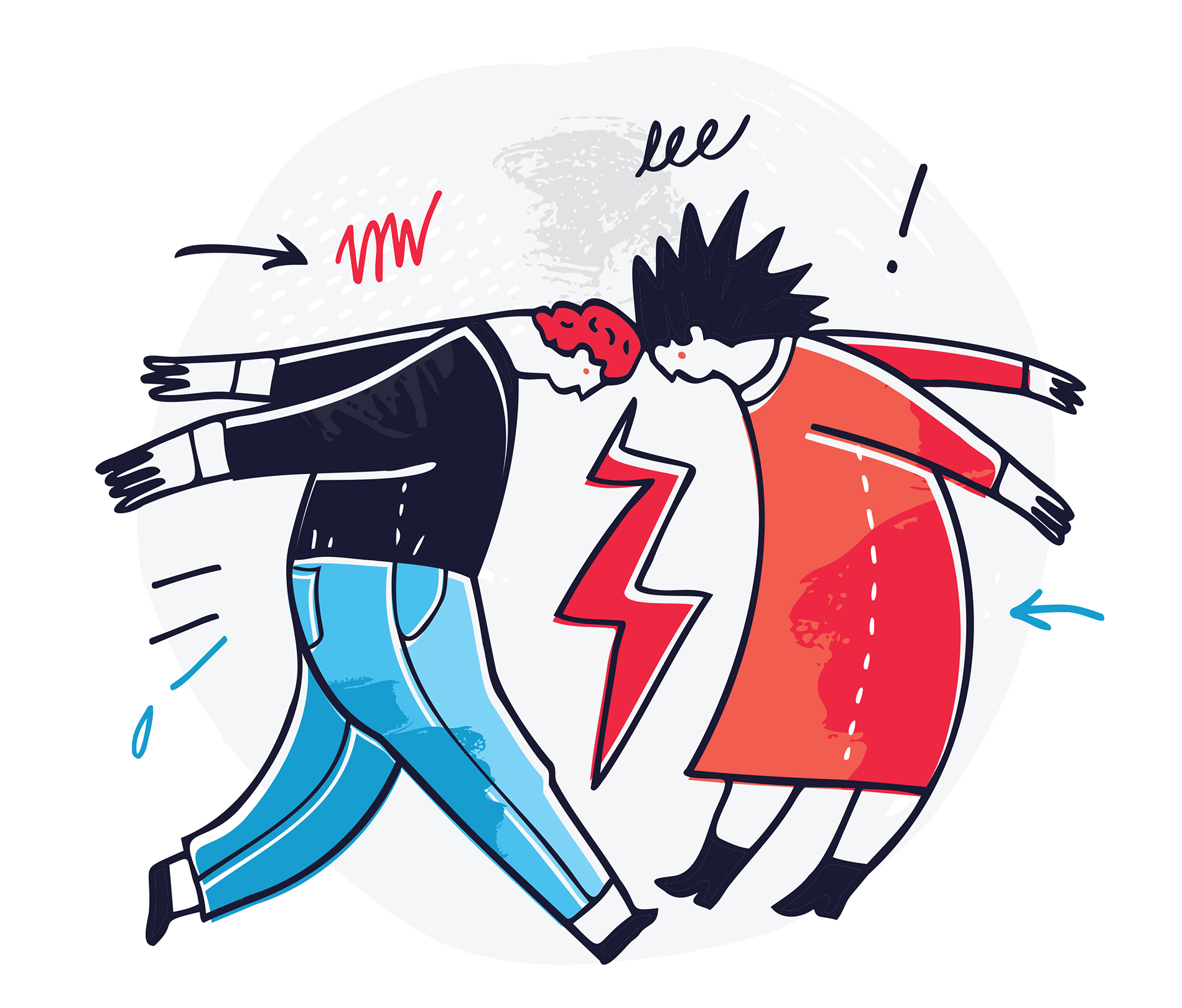
You’ve probably seen couples who are struggling because of too much reactivity and inadequate ability to tolerate differences. That was the challenge in this case

In Part 1, we explored why individual therapy can sometimes stall when working with relationship distress. It’s often because of the absence of a relational
"*" indicates required fields