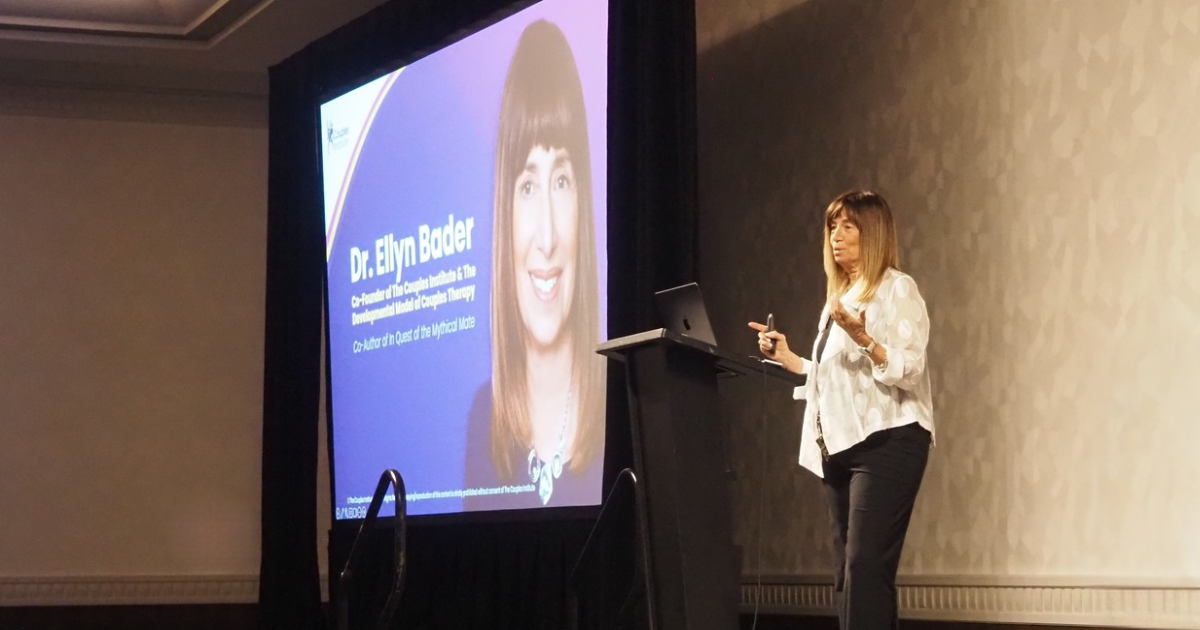
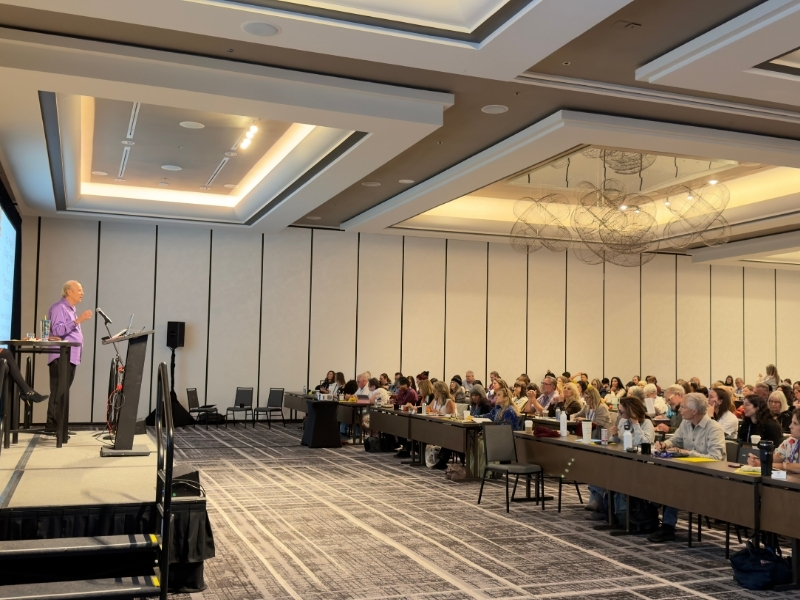
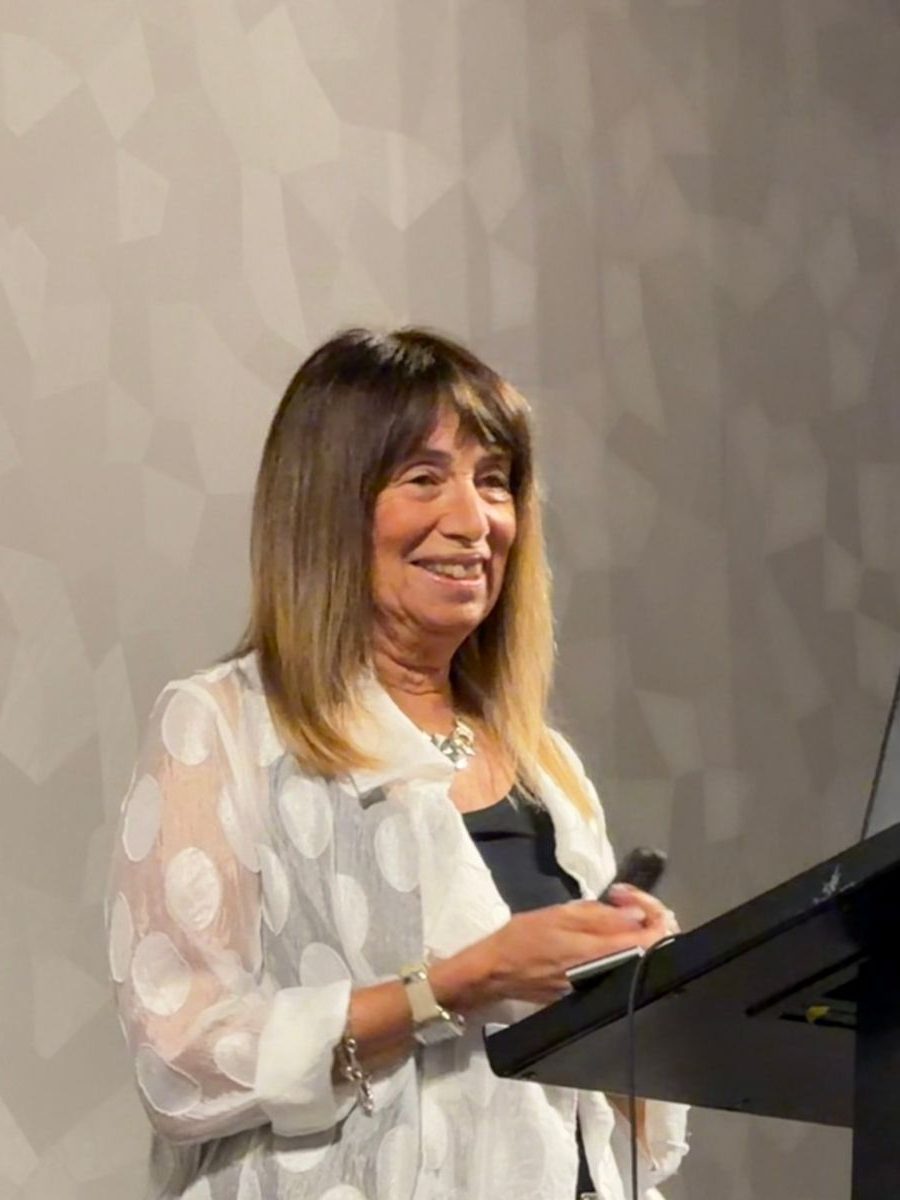
I always enjoy writing a blog after returning from a conference because it encourages me to review the presentations and workshops in my mind and revisit the main ideas. The Couples Conference in San Francisco this month was exceptional, and so it’s an extra pleasure to write this blog post for you.
What helps love endure – and what does that ask of us as couples therapists?
I opened the conference by inviting a shift in the questions partners ask. When someone says, “I’m not in love anymore,” what might become possible if they also asked, “How developed is my own capacity to love?”
Because love isn’t only a feeling. It is a capacity:
- To remain present when you’re uncomfortable.
- To know yourself.
- To reveal yourself.
- To listen without immediately defending.
- To see your partner as someone separate from you.
- To keep growing when the person you love doesn’t make that growth easy.
As therapists, we can ask a parallel question: “Who are these people capable of becoming?”
And how can we help spark their growth and vitality in a long-term relationship?
Staying Connected While Becoming More Fully Yourself
In the workshop that followed, I demonstrated how lasting love asks us to do two things that can seem contradictory: form a deep attachment to another person and continue developing as a separate individual.
This is where integrating attachment and differentiation becomes essential.
Attachment theory helps us understand why connection matters so deeply. It speaks to our yearning to feel safe and secure with someone, and how our attachment patterns influence the ways we seek closeness, respond to separation or threat, and turn toward—or away from—the people who matter most.
Differentiation reminds us that our own thoughts, feelings, and desires matter, too. It describes the emotional capacities we develop to sustain connection when loving gets difficult.
Differentiated partners can remain connected when they feel disappointed, frightened, or angry—even when they don’t particularly like each other in the moment. They can take a partner’s wishes seriously without automatically agreeing or giving something they are unwilling to give.
Mature intimacy requires both attachment and differentiation. In couples therapy, we work with the longing to belong and the challenge of sustaining a vibrant self while belonging.
Memorable Highlights from the Speakers
Across the conference, speakers offered ideas that invited us to examine both our clients’ patterns and our own responses in the therapy room. Here are a few highlights, paraphrased from my notes.
Wayne Baker: Notice your own anxiety.
Pay attention to your body. What do you do in sessions when you feel anxious? Recognizing your response is an opportunity to become more deliberate about what you do next.
George Faller: Know your mission.
Begin a session with a clear sense of purpose. Then notice what happens when you’re interrupted or shift your attention from one partner to the other. Do you maintain your direction, or lose your way?
Janina Fisher: Listen beyond words.
Traumatic experiences may be remembered through bodily sensations and reactions, without a clear verbal narrative. Janina also highlighted how anger in moments of closeness may reflect disorganized attachment with preoccupied tendencies.
Ramani Durvasula: Pay attention to the public–private divide.
A narcissistic partner’s public presentation may differ dramatically from how they treat their partner in private. That discrepancy deserves our attention.
Fiona O’Farrell: Consent is part of differentiation.
Consent is ongoing. It can change or be withdrawn at any time; it is not a one-time agreement.
Michelle Frank: Affirm strengths and respect the risks of unmasking.
Neuro-affirming care recognizes strengths. It also acknowledges that, for some clients, unmasking may carry real risks. Context matters.
Tammy Nelson: Make room for bravery.
Thinking of our offices as brave spaces not safe spaces. It takes courage and emotional risk to do deep therapeutic work.
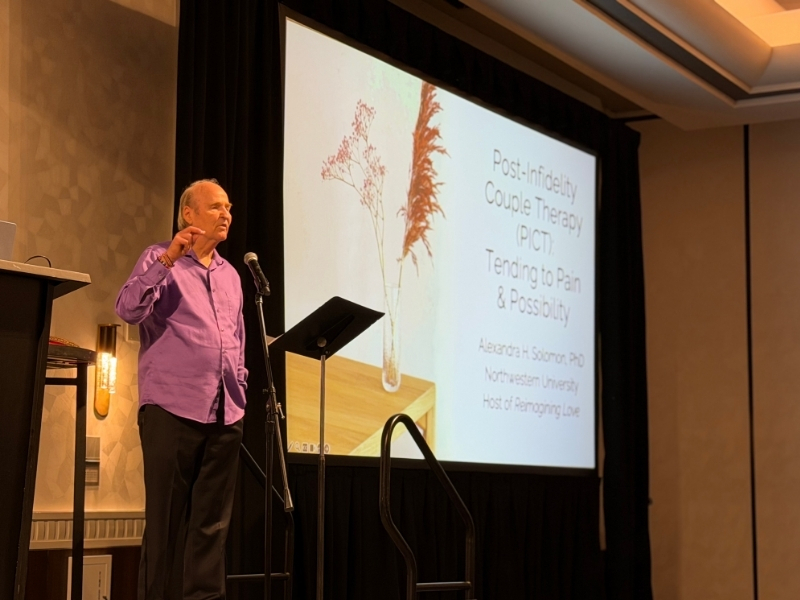
Alexandra Solomon: Look closely at the circumstances of betrayal. Alexandra offered several dimensions to consider when assessing what may make infidelity repair more or less difficult:
- Was the infidelity disclosed or discovered?
- Was it a one-time event or ongoing?
- Was the other person unknown or someone the betrayed partner knew?
- Were the facts shared openly or revealed a little at a time?
- Was this a first betrayal or part of a repeated pattern?
These distinctions invite a more nuanced understanding of what a particular couple is facing.
Trauma exists in the Space Between Partners
In my final workshop, I returned to a central challenge in couples therapy: trauma does not live in isolation.
It is easy to get pulled into one person’s story – their pain, their early experiences, and their immediate distress. Those experiences matter deeply. But when that person is in a relationship, the effects of trauma also show up in the space between partners.
They appear in the fights, the silences, the lost dreams, and the moments when both partners long for connection but don’t know how to reach toward each other safely.
Our work is to understand each person’s experience while helping both partners recognize what happens between them – and then build the capacities to respond differently.
That brings us back to my earlier question: Who are these people capable of becoming?
Holding that question in mind helps us see beyond the immediate struggle to the possibilities for growth, intimacy, and a more vital life together.
In this workshop I demonstrated using the Initiator-Inquirer to work with trauma. If you’d like to learn more about this most popular and enduring of all our interventions, Click The Change Lab.
 We respect your privacy.